
Share This Post
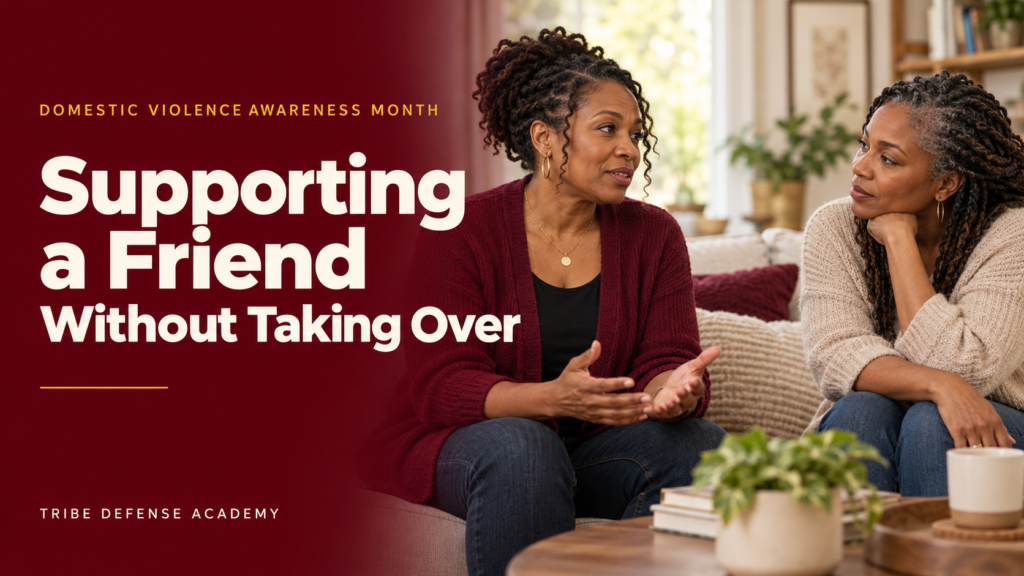
October is Domestic Violence Awareness Month. This week, we’re talking about what to do when you’re worried about someone you care about.
You notice your friend cancels plans more often. Their partner calls repeatedly when you’re together. Or they tell you something that makes you pause, then quickly follow it with, “But it’s not that bad.”
You want to help. You may also want to say, “Pack your things. We’re leaving.”
That impulse can come from love. But your friend needs room to speak and make choices, especially if someone else is already limiting both.
Supporting a friend in a controlling relationship starts with listening, respecting their decisions, and asking what help would actually be useful. The National Domestic Violence Hotline’s guide to talking about relationship abuse encourages a supportive approach without shame or pressure.
Start with what you noticed
You do not need to diagnose your friend’s relationship to express concern. Choose a private moment when it is safe to talk, and describe a specific behavior.
You might say:
“I noticed you seemed worried about getting home before your partner called. How have you been feeling?”
Or:
“You mentioned having to explain every purchase. Would you like to talk about that?”
Give them room to answer. They might share more, change the subject, or say everything is fine. You can let them know you care without demanding an explanation.
“I’m here if you ever want to talk” leaves the door open.
Listen without making them defend themselves
When someone opens up, resist the urge to turn the conversation into an investigation.
Questions like “Why did you stay?” or “Why didn’t you tell me sooner?” can make someone feel they have to justify their choices before receiving support.
Try:
- “I’m glad you told me.”
- “You don’t deserve to be treated that way.”
- “Do you want me to listen, or would you like help thinking through options?”
You do not need every detail to take their concern seriously. The Hotline explains that shame and guilt from loved ones can deepen isolation. A patient conversation gives your friend space to be heard.
Respect their choices, even when you are worried
Your friend may stay, leave, return, or remain unsure. That can be difficult to watch.
The Hotline’s guidance on supporting someone who returns to an abusive relationship emphasizes respecting their ability to make decisions rather than telling them what they must do.
You can express concern without making support conditional:
“I’m worried about how you’re being treated. I care about you, and I’m willing to listen.”
Avoid promising that leaving will solve everything or insisting on a deadline. An advocate can help your friend consider their circumstances and options.
Offer help they can accept-or decline
“Let me know if you need anything” is caring, but a specific offer may be easier to answer.
Ask whether they would like company while contacting an advocate, help finding support resources, or assistance with a practical task they identify.
Then listen to the answer.
The Hotline’s guide for when a survivor asks for help reminds supporters that the person experiencing the situation is the one who can explain what they need.
You can also be honest about your limits. Offer what you can reliably do rather than making promises you cannot keep.
Check before sending a link or message
A resource can be helpful, but first ask whether receiving it is safe.
“Is it okay for me to text you about this?”
“Is there a time or way you prefer I contact you?”
Phones, accounts, and browsing activity may be monitored. Private browsing does not completely erase activity. The Hotline’s internet safety guidance offers information about these risks.
Avoid posting about your friend’s situation or sharing their story without permission. Before taking action on their behalf, consider whether it could expose something they have not chosen to disclose.
You can ask for guidance, too
You do not have to figure this out alone. The National Domestic Violence Hotline supports concerned friends and family members as well as people experiencing abuse.
Visit TheHotline.org, call 800-799-SAFE (7233), or text START to 88788 for confidential support. An advocate can help you consider ways to support someone you care about. In immediate danger, call 911 when it is safe to do so.
At Tribe Defense Academy, judgment-free education includes making room for people to ask questions without having to prove they deserve support.
Your friend does not need you to have the perfect speech. Start with a calm conversation, a listening ear, and respect for their choices.